

Learning advice
How to Choose a Language and Build a Learning Plan You Can Keep
Choose a language by purpose, access and practice opportunities rather than universal easy-or-hard rankings.
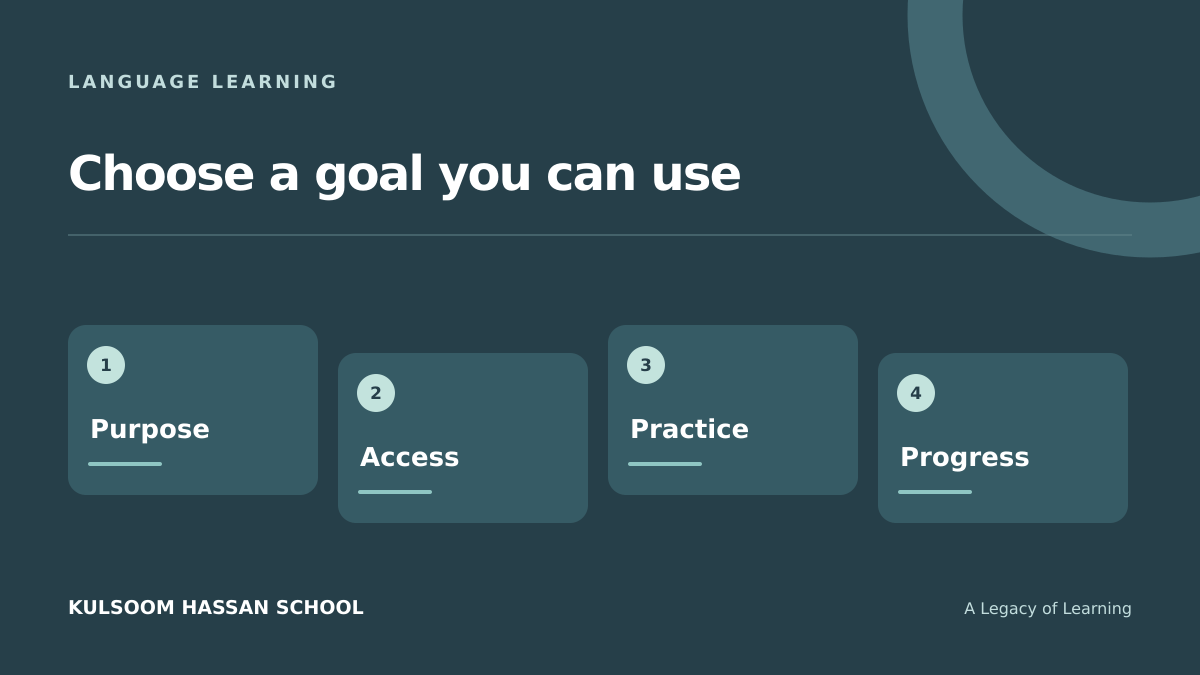
The easiest language to learn is not the same for every person. Your existing languages, familiarity with writing systems, access to teaching and opportunities to use a language all influence the experience. Searching for the easiest language to learn for English speakers can generate interesting comparisons, but it cannot decide which language will be useful enough for you to keep practising.
A better starting point is a situation you want to handle. You might want to speak with family, study abroad, read literature or work with a particular community. Once that purpose is clear, compare the resources and practice opportunities available to you. Motivation becomes more practical when it is connected to an activity rather than an abstract promise of fluency.
Replace broad difficulty labels with specific questions
Lists of the hardest languages to learn often mix several different challenges. A learner might find a new script demanding but enjoy the sound system, or understand grammar explanations while struggling with spontaneous speech. These are different problems and need different practice. Calling a language the toughest language to learn does not tell you what to do next.
Our guide to language difficulty explains this issue in more detail. Instead of asking only which languages are difficult, identify the skill that matters to your goal. Then ask what support, examples and feedback would make that skill manageable. This produces a more useful plan than choosing a language solely because an online ranking labels it easy.
German: connect learning with a real destination or task
If your interest is Germany, learn the language through tasks relevant to your plans: introductions, appointments, study routines or workplace conversations. To learn German language patterns, connect examples with meaning and reuse them in new sentences. Memorising a rule can help, but understanding a rule is not the same as retrieving it quickly in conversation.
For readers asking how to learn Deutsch, start with our German beginner routine. If you want to learn German online with teaching support, compare an online German course by starting level, feedback and schedule. A search for German classes near me should lead to the same checks, plus confirmation of the real location and current intake.
Korean and Japanese: practise beyond isolated words
If you want to learn Korean, choose beginner materials that connect the writing system, audio and short interactions. The Online King Sejong Institute is an official starting point to investigate. Check the current course level and registration arrangements rather than assuming every resource uses the same format.
A common polite Korean greeting is 안녕하세요, often romanised as annyeonghaseyo. 감사합니다, gamsahamnida, expresses thanks politely. Learning a word in Korean is a useful beginning, but listen to how it is used and what response might follow. For Japanese language learning, our Japanese beginner guide connects useful phrases with kana and official learning resources.
Spanish, Arabic and other language goals
Adults who want to learn Spanish online can compare group teaching, tutors and independent practice using our Spanish learning guide. Arabic learners should first establish the variety and purpose of their course; our Arabic guide explains why that decision matters. Neither language should be chosen or rejected on a universal difficulty label alone.
If you want to learn Hebrew, learn Mandarin or learn Tagalog, begin with the same practical questions: who will you communicate with, which skills will you use and where will feedback come from? For online French courses or supporting practice, TV5MONDE’s French-learning resources provide an official resource to explore. These examples are learning directions, not a list of courses currently offered by this school.
Build a plan with evidence of progress
Choose one realistic communication task for the next few weeks. Select a structured learning resource, a short source of understandable listening or reading and a way to receive feedback. Repeat the task periodically without prompts. Notice whether you understand more, respond more independently or need fewer corrections.
- Set a schedule small enough to maintain during an ordinary busy week.
- Revisit useful material instead of replacing it with something new every day.
- Practise producing language as well as recognising answers on a screen.
- Adjust the plan when the task is too difficult or no longer useful.
The best way to learn a language is not one product or one timetable for everyone. It is a workable combination of meaningful practice, review and feedback. Our language-learning programme comparison can help you assign different tools to different jobs.
Check what is actually available before enrolling
Kulsoom Hassan School’s course catalogue lists confirmed offerings. Recruitment for Spanish, Japanese and Arabic teachers is part of developing future provision, not a promise that all three courses are already running. Other interests can be raised through an enquiry, with availability and suitable support confirmed individually.
For learners in the US, UK, Canada or Australia, confirm the time zone, full fee and delivery arrangements before enrolling in any online course. A plan that fits your everyday life is more likely to survive beyond the first enthusiastic week and become a useful part of learning a new language.