

Learning advice
Language-Learning Programmes: How to Compare Apps, Audio and Classes
Compare Pimsleur, Rosetta Stone, Babbel and Lingopie by learning task, and build a balanced routine.
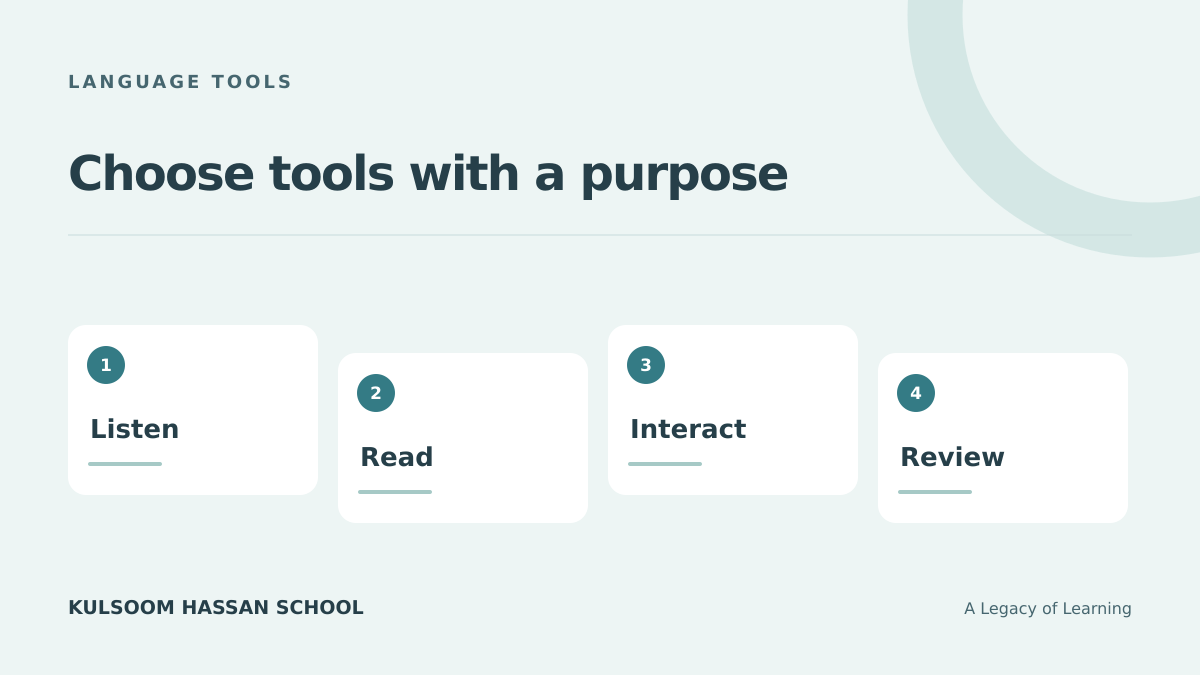
The best language-learning programmes are not necessarily the ones with the most features. A useful programme helps you practise something you need, at a level you understand, often enough to remember it. Someone preparing for a speaking interview needs a different balance from someone learning to read family messages or follow television dialogue.
Start by separating the learning task from the product name. Audio practice, visual exercises, structured lessons, subtitled video and live conversation can complement one another. They are not interchangeable, and buying several subscriptions does not automatically create a coherent course. This comparison focuses on how to evaluate formats rather than ranking products by unsupported claims.
Audio practice and Pimsleur
Pimsleur describes its method around listening, responding and revisiting material. An audio-led approach may suit a learner who wants a structured speaking routine away from a screen. The practical question is whether you actually pause, formulate a response and say it aloud rather than merely letting the recording play.
Try using an expression from the session in a different situation afterwards. If you can only reproduce the exact recorded dialogue, you need more flexible practice. Pimsleur language materials should also be assessed against your reading and writing goals. Audio practice alone cannot show you whether a written application or email is accurate.
Visual context and Rosetta Stone
Rosetta Stone presents language through an immersion-oriented approach and includes speech-recognition features. When comparing Rosetta Stone languages or plans, check that your target language and preferred devices are supported under the current offer. Features and commercial terms can change.
Visual context can help you connect language with meaning, but consider what you do when an exercise remains unclear. Some learners need an explicit explanation or a teacher’s example before they can use a pattern confidently. Speech recognition can support practice; it should not be treated as a complete assessment of your ability to hold an unpredictable conversation with another person.
Structured lessons and Babbel
Babbel explains its teaching approach through structured language lessons and practice. Evaluate a sample against your starting level. Are you learning expressions you will use? Do review activities make you retrieve language from memory? Can you explain what you learned after closing the lesson?
When searching for Babbel language options, check the current catalogue rather than assuming every language is offered. Also distinguish any live teaching or additional features from the subscription you are considering. Read renewal and cancellation conditions before payment. A promotional price is not necessarily the ongoing price or the full cost of a complete learning plan.
Video and Lingopie
Lingopie uses video content with interactive subtitle features. This format can help connect an expression with its spoken context. It works best when you select material that is challenging but still manageable. Watching an entire programme with no deliberate recall may provide entertainment without addressing the gaps you intended to practise.
Try a short scene. Watch once for the situation, replay a few useful lines and then describe what happened without looking at the subtitles. Check current language availability, content access and regional conditions before subscribing. Do not assume every programme or streaming integration is included everywhere.
Add reading, exchange and teacher feedback
Conversation exchange and supported reading fill other roles. Our HelloTalk and Readlang guide explains how to connect these activities. A language partner is not automatically a qualified instructor, and a translation tool does not always explain why a sentence works. Use each resource with an appropriate expectation.
A teacher can help identify recurring errors, select tasks and explain a pattern you have repeatedly misunderstood. That does not make every paid class worthwhile. Ask to see the course outcomes, feedback arrangements and level-placement process. Compare online language courses by what learners actually do during lessons, not only by the number of videos or worksheets supplied.
Test a small combination before expanding
Build a two-week experiment around one task, such as describing a normal working day. Choose one structured resource, one source of understandable listening or reading, and one opportunity for interaction. At the beginning and end, attempt the same task without prompts. Notice improvements and remaining difficulties rather than counting only points, streaks or minutes watched.
- Check language and level availability before choosing a programme.
- Confirm the full price, renewal terms and cancellation process.
- Decide which activity requires feedback from another person.
- Keep the resource if it supports your goal and fits your routine.
The best language learning programme for you is the one that fills a real gap within a sustainable plan. For a teacher-led German option, compare the school’s current courses with the criteria in our German course selection guide. Other language interests can be discussed through an enquiry; availability must be confirmed individually.