

Study planning
Study in Canada: A Careful Plan from Course Selection to Arrival
Compare programmes, check institutions, organise funding and keep admission and study-permit decisions separate.
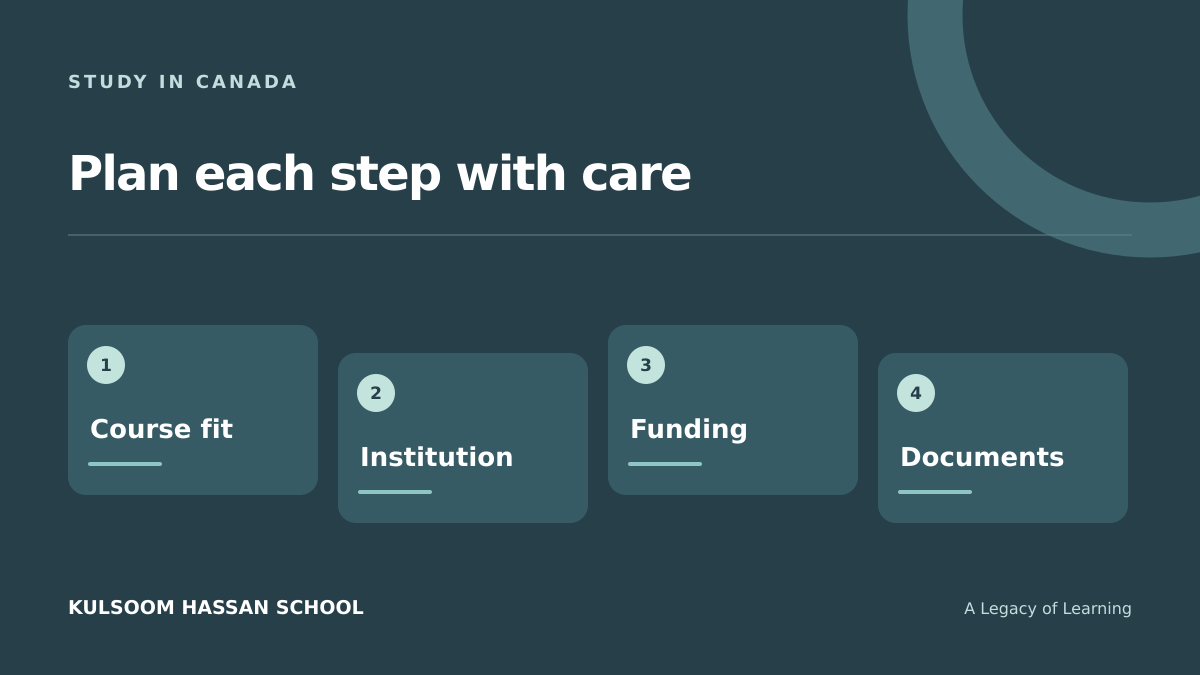
Start with your educational goal
A plan to study in Canada should explain why a particular programme fits your background and what you want to learn. Begin with the qualification level, subject and learning outcomes. A country preference is useful, but it cannot tell you whether a specific course is academically suitable or affordable.
Use EduCanada’s study-planning resources to explore institutions, programmes and practical planning. Then verify details on the institution’s own website. This article provides a research process; it does not promise admission, a study permit or future immigration status.
Compare programmes rather than labels
Record the full name of the qualification, its level, duration, location, delivery mode and entry requirements. Ask how it builds on your previous studies. If two programmes have similar names, compare the modules and assessments rather than assuming that the learning experience is the same.
For a bachelor’s application, check your school qualifications and subject preparation. For a master’s application, check the expected undergraduate background and any additional requirements. Pathways or preparatory programmes need their own eligibility and progression checks; they should not be treated as a guaranteed bridge to any degree.
Build a small shortlist before sending applications. For each option, write one sentence explaining the academic reason you are considering it. If that sentence only mentions the country or a possible work opportunity, return to the course content and clarify the educational fit.
Check the institution and exact programme
Immigration, Refugees and Citizenship Canada maintains a designated learning institutions list. Use the official list when checking a Canadian institution. A DLI’s status does not mean that every programme automatically qualifies for a post-graduation work permit.
If post-study work eligibility matters to your decision, verify the current programme-specific and personal eligibility rules through IRCC before paying a deposit. Do not rely on an old social-media screenshot or a broad statement that all graduates from a named institution qualify.
Separate admission from the study-permit process
An institution assesses your admission application; IRCC assesses a study-permit application. These are separate decisions. An offer letter is an important document, but it is not itself permission to enter Canada or begin studies there.
IRCC’s current document guidance covers acceptance documentation, identity, financial support and other requirements. Provincial or territorial attestation requirements and exemptions must be checked for your situation. Quebec has additional processes to check where relevant.
Use the official instructions for your circumstances and country of application. This guide deliberately avoids quoting one financial threshold or assuming one checklist applies to every student. Requirements can change, and an individual case may need additional evidence or qualified immigration advice.
Build a budget you can explain
Separate tuition from living expenses, travel, required cover and other charges. Check how the institution presents tuition: per term, per year or for the full programme. Read the payment schedule and refund conditions, including what happens if plans change.
For a family budgeting in PKR, keep the original CAD amounts alongside any currency conversion and note when the conversion was made. Include a sensible allowance for changes rather than treating today’s conversion as a guaranteed future price. Identify which funds are already available and which are still uncertain.
Do not turn a possible scholarship or hoped-for part-time job into confirmed funding. A workable plan should remain understandable if an award does not arrive or employment takes longer than expected. Discuss an unresolved funding gap before committing to a non-refundable payment.
Prepare application documents with care
Make a document inventory: academic records, qualification certificates, identity documents and any course-specific evidence. Check translation requirements directly. Use the same names and dates consistently, and explain discrepancies through the appropriate process rather than silently changing records.
A personal statement or explanation should reflect your own academic history and reasons. A consultant can help you organise and clarify it, but it should not contain invented experience. References should be prepared or approved by the genuine referee and submitted according to the institution’s instructions.
If English language evidence is needed, confirm which tests and results are accepted for the programme. Our IELTS practice-test guide can help with preparation planning, but an IELTS result alone does not settle every admission or immigration requirement.
Plan support through arrival
After the relevant approvals, organise accommodation, travel documents, arrival instructions and enrolment arrangements. Keep important contact details accessible offline and check the institution’s guidance for new international students before departure.
Our study-abroad journey explains how Kulsoom Hassan School supports planning from selection through arrival preparation. Send an enquiry with your qualifications, subject interests and budget range. We can help you identify the next research and application steps while keeping institutional and government decisions clearly separate.