

English learning
Finding English Classes: ESL and ESOL Options in Four Countries
Find official starting points for English classes in the US, UK, Canada and Australia, and check eligibility before enrolling.
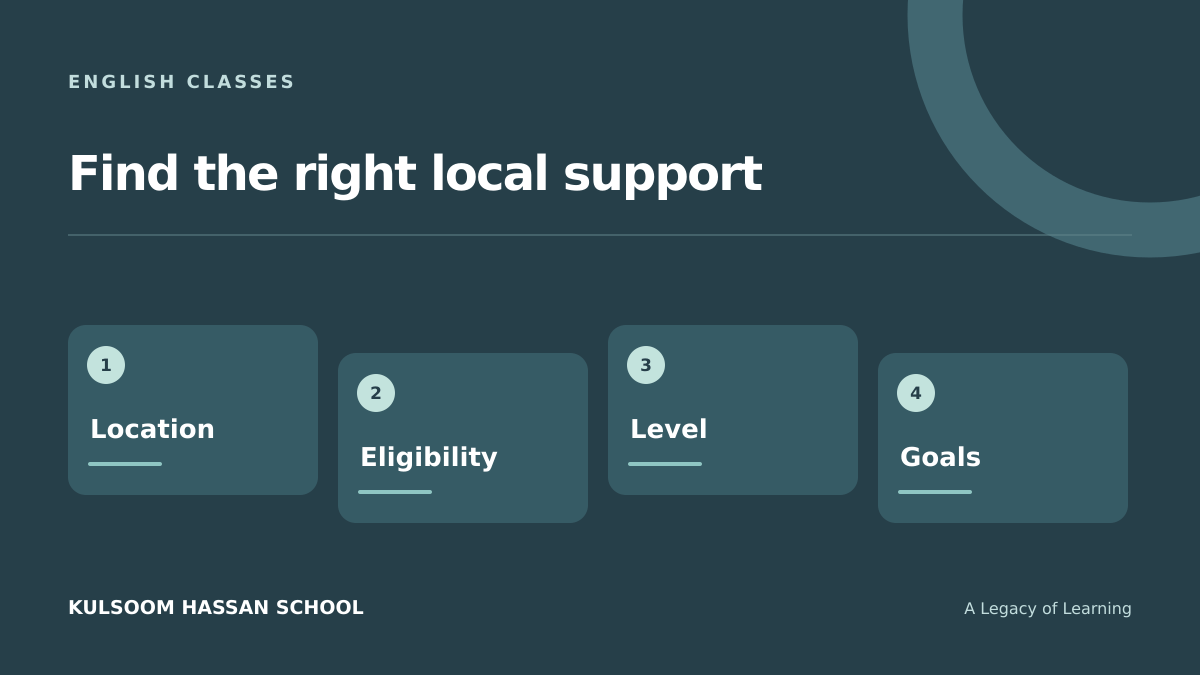
Searching for English classes near me can produce private lessons, public programmes, community groups and examination preparation in the same results. They serve different purposes. Before choosing, decide whether you need everyday communication, workplace English, academic study or preparation for a particular test. A general conversation class may be useful without being an IELTS preparation course.
ESL usually means English as a Second Language, while ESOL means English for Speakers of Other Languages. Providers use these labels in different ways. Read the actual course description, level and eligibility conditions rather than assuming the acronym guarantees a particular qualification or teaching format. The following official starting points can help you investigate local options.
United States: investigate community and adult learning options
USA.gov’s English-learning guidance points learners towards free or low-cost resources and ways to find local classes. Depending on your area, schools, libraries, adult education services or community organisations may be useful places to ask. Availability and enrolment rules vary; a nearby library does not necessarily run an English class itself.
When searching for ESL classes near me or free English classes near me, ask about placement, class dates, materials and any registration charge. Explain whether your priority is speaking, reading forms, work communication or further study. Check whether the class accepts new learners during a term and how much independent practice is expected between sessions.
United Kingdom: check the relevant local system
GOV.UK guidance on improving English skills includes information about ESOL and finding providers in England. Funding or reduced fees can depend on personal circumstances and eligibility. Do not treat a funding rule for England as an automatic rule for Scotland, Wales or Northern Ireland; check the appropriate local provider and public guidance.
For an English language course near you, ask whether the programme includes an assessment, a qualification or simply attendance-based learning. Those outcomes are different. Also confirm the timetable, accessibility arrangements and any documents needed for enrolment. If someone advertises a free place, request the full eligibility conditions and any additional costs before relying on that offer.
Canada: distinguish funded settlement classes from other courses
Canada’s official language-class guidance explains government-funded options including LINC and CLIC for eligible newcomers. Eligibility relates to immigration status and programme rules; being an international student does not automatically make someone eligible for these funded classes.
Read the current requirements and ask the provider about assessment and placement. Learners who are not eligible may still find other paid, community or institutional options. Compare the teaching purpose carefully. A settlement-language programme, a college’s academic English course and private spoken English classes can differ in content, access and intended outcomes even when all involve learning English.
Australia: check AMEP eligibility directly
Australia’s Adult Migrant English Program provides English-language support for eligible migrants. Eligibility and access depend on the programme’s current rules and the learner’s circumstances. Contact an approved provider with your situation rather than assuming every temporary resident or overseas student qualifies.
If you are comparing AMEP with another English course, ask about level placement, delivery format and the support available at your location. Confirm when you can start and whether the timetable is workable. A course that meets the eligibility criteria still needs to fit your travel, caring responsibilities and available study time.
Compare paid and free classes on the same essentials
Price matters, but it does not describe the entire learning experience. Find out how much speaking practice you receive, whether you get feedback and how teachers assess progress. An expensive course is not automatically suitable, and a free community programme can be valuable when its purpose matches your needs.
- Ask how the provider places learners at an appropriate level.
- Confirm live teaching hours separately from independent study or recordings.
- Check materials, assessment costs and cancellation conditions.
- Ask what a learner should be able to do by the end of the course.
For online classes, confirm the time in your own city and how seasonal clock changes are handled. Ask what happens if you miss a lesson. If your goal involves a particular examination, establish whether the class teaches that examination rather than general language skills alone.
Connect lessons with daily practice
Use a lesson topic outside class through a short message, a recorded explanation or a conversation you can prepare for. Keep a list of situations that remain difficult and bring one to the teacher. Our English speaking routine offers a practical way to connect listening, speaking and feedback.
Kulsoom Hassan School does not claim local branches or government-funded provision in these four countries. Check our course catalogue for current school offerings and contact us about future English or test-preparation availability. If IELTS is your objective, start with the official practice-resource guide and confirm the test required by your intended institution.