

English learning
Learn English Speaking Online: A Routine for Real Conversations
Practise useful conversations, get specific feedback and compare online or local English speaking classes.
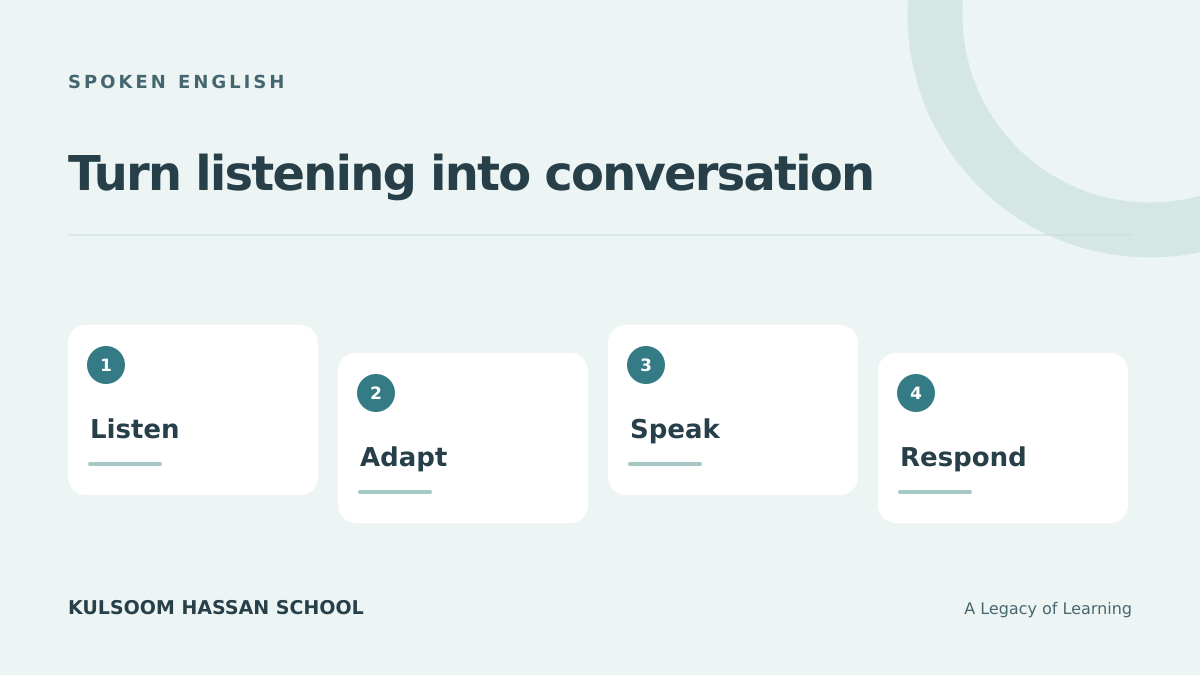
Learn English speaking through small conversations
If you understand some English but struggle to reply, your next step is not necessarily another long vocabulary list. Start with a short conversation that matters in your life: introducing yourself, describing your work, asking for clarification or explaining a problem.
Choose one task and record your first attempt. Do not aim for an accent you hear in a film. Aim to be understandable and able to respond. A useful question is: “Could someone follow what I meant without needing to guess?” That gives your practice a clearer purpose than simply trying to sound fluent.
Choose input you can work with
The British Council’s free speaking resources organise practice by level and use situations to introduce useful language. Choose a level at which you can understand enough to participate, while still finding something new to learn.
Listen once for the situation. Then listen again for useful phrases. Notice how speakers ask for time, show interest or check understanding. These small phrases help a conversation continue even when you do not know every word.
Avoid spending a whole session translating a passage that is far beyond your current level. A shorter dialogue that you can understand, adapt and reuse may give you more productive practice.
Use the listen, adapt, speak routine
Try this suggested 20-minute practice session. The timing is a starting point you can adjust, not a promise that a fixed number of minutes will produce fluency.
- Listen to a short dialogue for five minutes and identify its purpose.
- Choose three useful phrases and change them to fit your own circumstances.
- Record a one-minute response using those phrases without reading a full script.
- Listen to yourself and identify one unclear idea or pronunciation problem.
- Record again, then ask yourself a related question and answer it spontaneously.
For example, after practising “I work in…”, add what you enjoy about your work and one difficulty you face. If you are a student, explain a subject you like and why. The second question makes you use the language rather than only repeat it.
Keep a small, useful feedback list
Trying to fix every error at once can make speaking exhausting. Pick one recurring issue, such as leaving out a past-tense ending or using a word that does not match your intended meaning. Write a corrected example and practise it in a new sentence.
Ask a teacher or conversation partner for specific feedback. “Was my explanation clear?” is often more useful than “Was my English good?” If your partner did not understand something, ask which part caused the difficulty and try another way of explaining it.
When listening to your recording, pay attention to pauses as well as grammar. A short pause to organise an idea is normal. If you stop because you are translating every word, practise shorter messages and familiar sentence patterns before making the task more complex.
How to choose an online English speaking course
Look for opportunities to take part, not only watch. Ask about lesson level, group size, speaking activities, instructor feedback and practice between sessions. Request the actual arrangements for attendance, materials and payment before enrolling.
If you prefer “English classes near me” or “spoken English classes near me”, verify the classroom location and teaching hours. For an online course, check the time zone, microphone requirements and whether your environment lets you speak comfortably. The best option for you is one you can attend and use actively.
A general English speaking course and an IELTS preparation course serve different purposes. Everyday communication can support your development, but IELTS also requires familiarity with particular tasks. Our IELTS course checklist explains that distinction.
Track one real outcome each week
Repeat your first conversation task at the end of the week. Then change one detail: the listener, the setting or the follow-up question. Can you adapt without returning to the script? Keep a short note of what became easier and what still needs help.
You can add reading and language exchange through the tools in our HelloTalk and Readlang guide. Use them to support a routine rather than replace it with more screen time.
Kulsoom Hassan School offers live online German courses and IELTS/PTE preparation. This English guide is a learning resource, not a claim that a general spoken-English batch is open. Ask the school about your goals and use the catalogue to find current courses and schedules.