

Study planning
UCAS Applications and Clearing: A Practical UK University Guide
Plan a UCAS application, understand Clearing and distinguish similarly named UK universities before shortlisting.
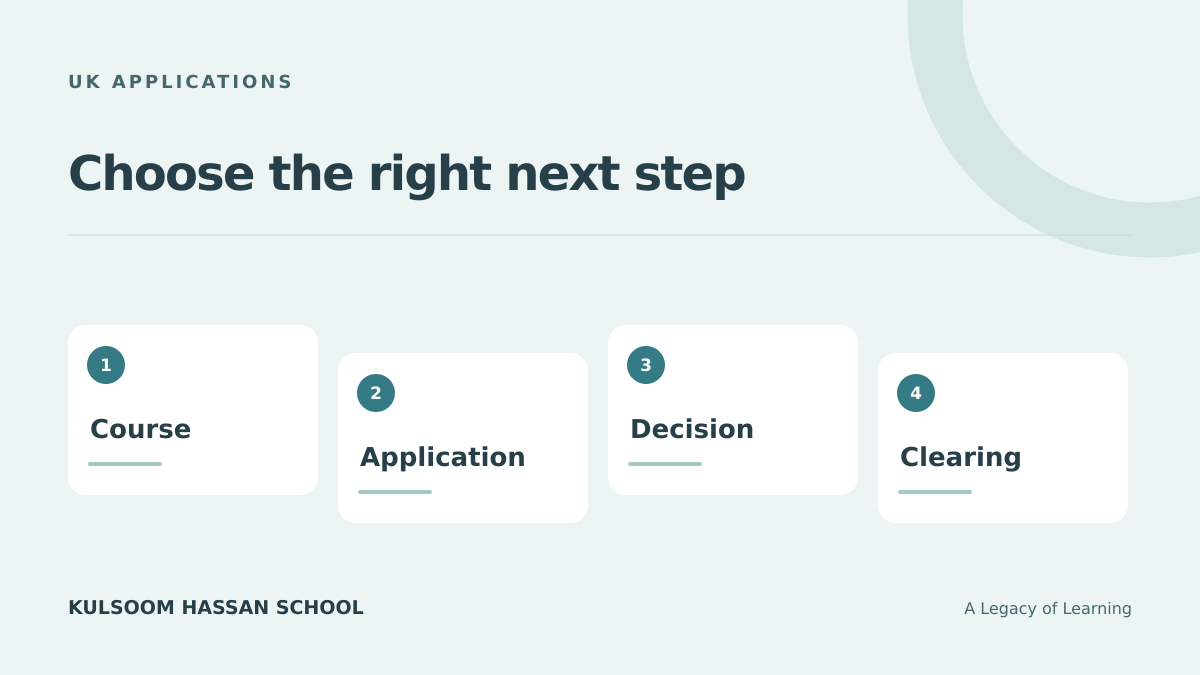
A plan to study in the UK should begin with the course and its entry requirements, followed by the appropriate application route. UCAS is important for many undergraduate applications, but postgraduate and some other routes can use an institution’s own system. Check the course page before assuming that every university application belongs in the same portal.
Your shortlist should also use the exact institution name. Searches such as “UK Manchester university” or “university of creative arts UK” can lead to ambiguous or imprecise results. A university’s official course page should confirm the awarding institution, campus, qualification and entry year before you compare costs or prepare documents.
Prepare a focused UCAS application
Use the current UCAS instructions for your entry cycle. Record the relevant deadlines, including any earlier course-specific deadline, and the arrangements for your reference. Check qualifications and English-language requirements on the institution’s official page. Meeting a general university requirement may not satisfy the requirement for a particular programme.
For 2026 entry onwards, UCAS personal statements use three structured questions. These address motivation for the subject, preparation through study and relevant preparation beyond formal education. Read the current character-limit instructions in UCAS before drafting. Old advice about writing a single uninterrupted statement should not be followed without checking the updated format.
Build evidence rather than a list of adjectives
Explain what an experience taught you and why it matters to the subject. A project, a book you considered critically or a relevant responsibility can provide useful evidence. Simply describing yourself as passionate or hardworking gives the reader little to evaluate. Keep examples accurate and connect them to the question being answered.
A consultant or teacher can help you identify unclear passages and organise your ideas. The application must still represent your own experience and thinking. Never add an award, placement or responsibility that did not happen. Give your referee useful factual information, while leaving them responsible for their own judgement and wording.
Understand what Clearing does
UCAS explains Clearing as a route connected with remaining course places and applicants who meet its conditions. Availability changes, and not every course participates. Check the official current-year guidance for dates and eligibility rather than relying on a previous year’s article.
If you are considering a Clearing university option, discuss the course with the institution and follow UCAS instructions about receiving permission before adding a choice. Ask about academic conditions, the campus, fees and accommodation. International applicants should also check whether the remaining timetable is realistic for any separate immigration and travel arrangements. A place being available does not guarantee those other steps can be completed in time.
Distinguish institutions in your shortlist
Sheffield Hallam University and the University of Sheffield are separate institutions. If you search for universities in Sheffield, compare the actual course at each rather than treating the city name as one option. Similarly, Nottingham Trent University is not the University of Nottingham.
For universities in Aberdeen, investigate the University of Aberdeen and Robert Gordon University separately. Swansea University has its own programme and campus information. The correct name of UCA is the University for the Creative Arts; check whether your chosen creative course requires a portfolio or other additional evidence.
Compare well-known universities by course fit
Our UK university shortlist guide introduces Heriot-Watt University, the University of Glasgow, Cardiff University, Liverpool John Moores University, the University of Sheffield, Lancaster University, the University of Manchester, Loughborough University, the University of Oxford and the University of Cambridge. It links to official information and explains why similarly worded searches should be resolved carefully.
A list of ranked universities in the UK cannot replace programme research. Rankings differ by methodology, subject and year. If you use a ranking, identify its publisher and edition, then compare teaching content, assessment, costs and entry requirements independently. A highly ranked institution may still be a poor fit for your preferred course or funding plan.
Keep decisions and documents organised
Create a tracker with course links, application route, deadlines, required evidence and questions awaiting an answer. Keep admission offers, fee conditions and any scholarship information together. Read the conditions before accepting or paying a deposit and ask the institution about anything unclear.
Kulsoom Hassan School’s study-abroad support can help students organise research and preparation. Admission decisions remain with institutions, and immigration decisions with the relevant authorities. Send an enquiry with your intended level, subject and entry year so the conversation starts with a practical plan.